



Timeline Template (excelsior.edu)
How to Make a Timeline (excelsior.edu)
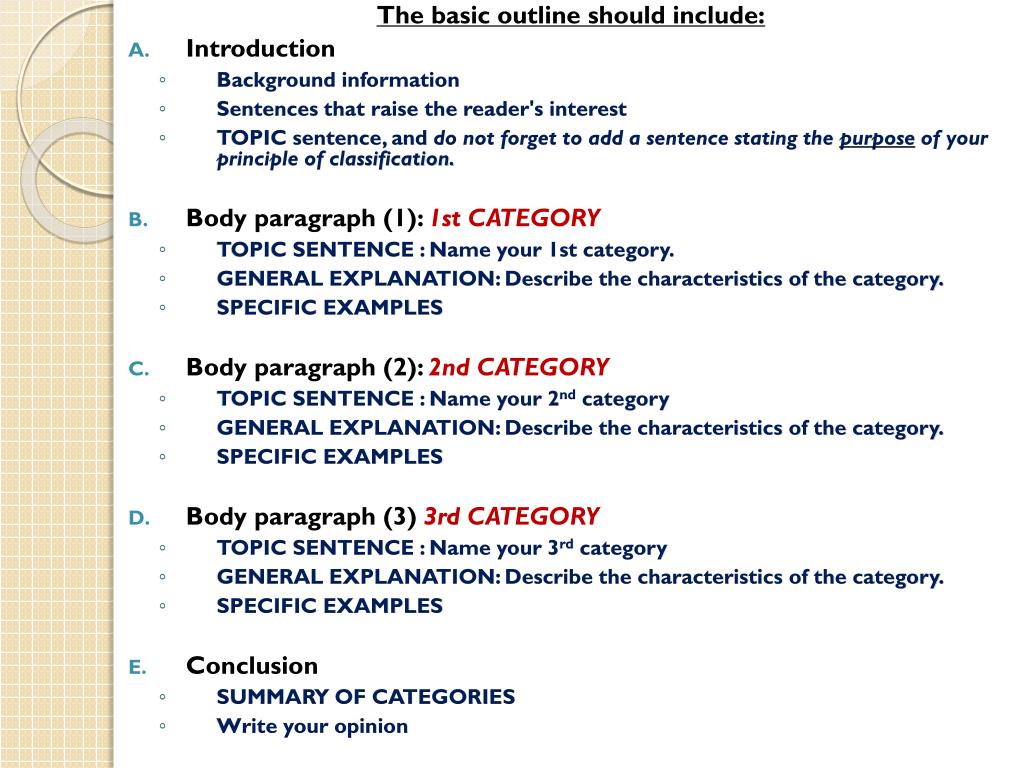
6-8 Essay Map.pdf (readwritethink.org)
Concept Map Template (excelsior.edu)
How to Make a Concept Map (excelsior.edu)
Evaluating an Argument (excelsior.edu)
Writing Patterns (excelsior.edu)
Synthesizing What You Read (excelsior.edu)
CriticalThinkingandStructuredResponseLesson-1.pdf
FREEReadingLogandDataTrackingChartTemplatesALLAGES-1.pdf
Reverse Outlining – UNC Writing Center (youtube.com)
Grammar Bytes! Grammar Instruction with Attitude (chompchomp.com)
Silva Rhetoricae: The Forest of Rhetoric (byu.edu)
The Elements of Style Archives – Collection at Bartleby.com
Papers as Puzzles – The Writing and Learning Center (unc.edu)
Tips & Tools – The Writing Center • University of North Carolina at Chapel Hill (unc.edu)
Sentence Types and Ways to Correct Run-ons and Comma Splices
Kevin Howell
Objective: Be able to identify four types of sentences: simple, compound, complex, and compound complex. You will also use these sentence types to identify and fix/correct run-ons and comma splices.
Part I. Sentence Types:
What are clauses?
In order to understand what a sentence is, we should start with what a clause is. A clause contains a subject and verb. For example – “Tom walks.” Here, “Tom” is the subject, and “walks” is the verb. That is a clause. However, there are two types of clauses: independent clauses and dependent clauses.
Independent clause – Contains a subject and verb and is a complete thought. This means that this independent clause is truly independent because it can stand on its own; it does not need any help. Let’s go back to the example of “Tom walks.” To check to see if this is truly an independent clause, ask yourself these four questions:
Is there a subject?
Is there a verb?
Is it a complete thought?
Does it make sense on its own?
If you answer yes to all of these questions, you have an independent clause.
Dependent clause – Contains a subject and verb like independent clauses do, but they cannot stand alone because they are not complete thoughts. For example, “When Tom walks.” Again, like the other example, there is a subject and a verb; however, by adding the word “When”, we have created a dependent clause.
Let’s go through the questions we asked to find out if we had an independent clause or not.
Is there a subject? Yes- Tom
Is there a verb? Yes- walks.
Therefore, we know that we have a clause. However, is it dependent or independent? We will know this by asking the next question.
Is it a complete thought? No, it is not. “When Tom walks.” Well, what happens when Tom walks? We do not know, so this is not a complete thought. We need more information in order for this sentence to make sense. We will learn later that we can correct this dependent clause by adding an independent clause that “saves/rescues” it.
Independent clause – “Tom walks.” It has a subject, a verb, and is a complete thought.
Dependent clause – “When Tom walks.” It has a subject and a verb, but it is not a complete thought. Therefore, it is dependent on the independent clause to be complete.
If you look back at the Simple Sentence example and compare it to this sentence, you should have a better understanding of the difference between a simple sentence and a compound sentence. The simple sentence – “Tom and Sydney walk and talk” – shared the verbs. They did not have their own verbs; therefore, we only had one true independent clause. However, in the compound sentence example – “Kevin loves coffee, and Sydney loves tea” – each subject has its own verb. Therefore, we have two independent clauses, not just one.
Here are three ways to create a compound sentence. However, why do we need three ways to create compound sentences? Because we want to have sentence variety.
Complex Sentences– Complex sentences are called complex because they get a little more complicated, because instead of having all independent clauses in our sentences, we are now going to add a dependent clause (D.C.). Here are the two ways to create a complex sentence.
The first way is Dependent clause, independent clause.
The second way is to reverse the order of the first way- independent clause (no comma necessary) dependent clause. Your dependent clause will most likely start with a subordinator (because, if, when, while, although, even though, before, after, etc.)
First example– D.C. + I.C. = Although Kevin loves coffee, Sydney loves tea.
Let’s break this complex sentence into parts so that we can understand it better. First, we have the dependent clause- Although Kevin loves coffee. This is dependent because it could not stand alone because it is not a complete thought. We need more information. The word “although” in this case is the subordinator that begins the dependent clause.
Second, we have Sydney loves tea. This sentence is independent because it has a subject, a verb, and would make sense on its own without the first part of the sentence because it makes sense. Therefore, this is an independent clause.
Therefore, we have- Although (Subordinator) Kevin loves coffee (D.C.) , (Comma) Sydney loves tea (I.C.). This is an example of D.C. + comma + I.C. The comma is used to separate the dependent clause from the independent clause so that reader knows what is coming next.
Second example– I.C. + no comma necessary + D.C. This time I am going to reverse the order of our first example. “Sydney loves tea although Kevin loves coffee.”
Now the I.C. is first, and the D.C. is second. It is not necessary to use a comma before the word “although” because “although” is our transition from the I.C. to the D.C. (The use or not use of this comma rule is different, depending on which grammar book you read.)
Compound-Complex Sentences- These sentences contain a compound sentence with at least one dependent clause.
Example– “Before Kevin and Sydney taught their classes, (D.C.) Kevin had some coffee, and Sydney had some tea (Compound Sentence).” So, this compound-complex sentence started with a dependent clause and ended with a compound sentence.
Part II. Run-ons (Fused) and Comma Splices:
What are run-ons or fused sentences? They are when a writer joins two independent clauses together with no punctuation.
For example, “Kevin loves coffee Sydney loves tea.” This sentence is fused or a run-on because there is no punctuation between the two independent clauses, which are “Kevin loves coffee” and “Sydney loves tea.” I will go over what a comma splice is next, and then we will learn how to fix both a comma splice and a run-on (fused) sentence at the same time because they are both fixed the same way.
What are comma splices? They are when a writer joins two independent clauses together with a comma. However, the comma is too weak for this job. The comma needs help.
For example, “Kevin loves coffee, Sydney loves tea.” Again, we have two independent clauses trying to be held together with a comma. However, the comma is too weak.
How to fix a run-on and comma splice– There are five ways to correct/fix a run-on and a comma splice. This is where it is very important to know the different types of sentences. So, let’s go ahead and correct/fix the examples of a run-on and comma splice.
Run-on= “Kevin loves coffee (punctuation missing) Sydney loves tea.” Again, no punctuation between the two independent clauses. This is a run-on or fused sentence.
Comma splice= “Kevin loves coffee, Sydney loves tea.” Here the comma is too weak to hold together the two independent clauses.
Let’s fix them by using the sentence types.
“Kevin loves coffee.” “Sydney loves tea.” Separate the two independent clauses into two separate simple sentences.
“Kevin loves coffee, but Sydney loves tea.” Join them with a coordination conjunction (FANBOYS).
1st way to create a compound sentence
Kevin loves coffee; however, Sydney loves tea. Join them with a conjunctive adverb (however, therefore, moreover, as a result, etc.) By knowing how to create different types of sentences, you should be able to avoid creating run-ons (fused sentences) or comma splices.
2nd way to create a compound sentence
The formula for the second way to create a compound sentence is similar to the first way. However, we are going to change the middle of the sentence.
Here is the formula: I.C. + ; conjunction adverb, + I.C.
Here is an example of the 2nd way to create a compound sentence. I am going to use the first example, but I am going to change the middle.
“Kevin loves coffee, but Sydney loves tea.” 1st way.
“Kevin loves coffee; however, Sydney loves tea.” 2nd way.
Notice that the only section that changed was the connecting part. We still have two independent clauses joined together; however, this time, they are joined together with a conjunctive adverb along with a semicolon and a comma.
If you notice, the only difference between the two is that now I have changed the middle from a comma–> , (FANBOYS) to a semicolon –> ; (Conjunctive adverb).
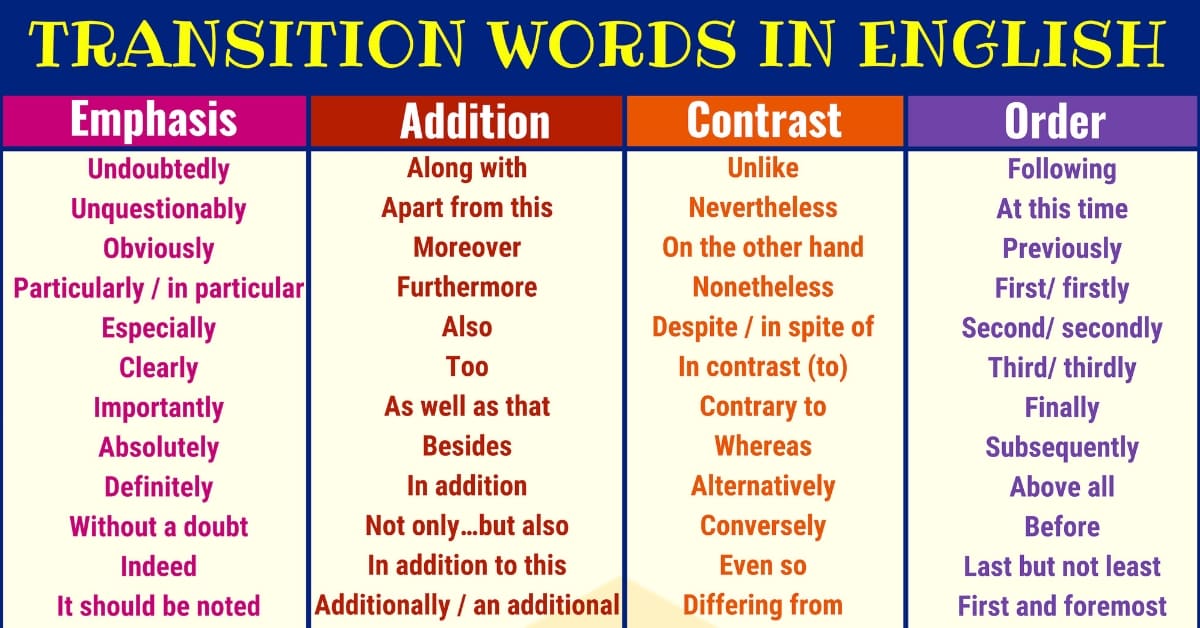
Some common examples of conjunctive adverbs are: however, moreover, furthermore, as a result, on the other hand, also, and in addition.
Independent clause (I.C.) + (comma) coordinating conjunction + Independent clause (I.C.)
Coordinating conjunctions are better known by the acronym FANBOYS.
FANBOYS = For, And, Nor, But, Or, Yet, So.
3rd way to create a compound sentence
To create the third way for a compound sentence, just join the two independent clauses with a semicolon. If you use a semicolon, make sure that the independent clauses have a strong relationship because there will be no clue word (FANBOYS or Conjunctive adverb) to help the reader.
Here is the formula. I.C. + ; + I.C.
I will give you examples of all three ways to create a compound sentence by using the previous examples given.
Kevin loves coffee, but Sydney loves tea. 1st way.
Kevin loves coffee; however, Sydney loves tea. 2nd way.
Kevin loves coffee; Sydney loves tea. 3rd way.
Simple sentences are one independent clause without any added dependent clauses. For example, “Tom walks.” This is a simple sentence, which is also an independent clause (subject, verb, and complete thought). Simple sentences can have more than one subject or more than one verb but only contain one combination of subject and a verb. It sounds confusing, but let’s go through some examples.
“Tom and Sydney walk.” Here, we have two subjects (Tom and Sydney) that are sharing one verb (walk). Therefore, we have a S+S+V combination. However, we do not have a S+V and another S+V or this would be a compound sentence.
“Tom and Sydney walk and talk.” Here, we have two subjects (Tom and Sydney) that are now sharing two verbs (walk and talk). This is still a simple sentence because we have S+S+V+V. We do not have two separate combinations of S+V and S+V. If we did, then this would be a compound sentence. If you are still a little confused, let’s go to Compound Sentences because by giving examples of them, it will help you understand Simple Sentences better.
Compound sentences are two independent clauses joined by punctuation or by punctuation and conjunctions. There are three ways to create or form compound sentences.
Example – “Kevin loves coffee, and Sydney loves tea.” Here we have two independent clauses joined by “comma” and “and”.
“Kevin loves coffee” = (Independent clause because it has a subject, a verb, and is a complete thought). “Sydney loves tea” = (Independent clause because it also has a subject, a verb, and is a complete thought). So, instead of having two simple sentences, we have combined them together by using a comma and a coordinating conjunction (and).
“Kevin loves coffee (I.C.) + , and (FANBOYS) + Sydney loves tea.” This is the first way that we can create a compound sentence.
Clause summary – There are two types of clauses: independent clauses and dependent clauses. They both have a subject and a verb. However, the independent clause makes sense by itself and can stand alone, while a dependent clause cannot stand alone because it does not make sense alone. The dependent clause needs to be “rescued” by an independent clause.
 Burns Tutoring